Plaza Sur
Among land iguanas, cacti and red Sesuvium
Highlights
Galapagos land iguanas, hybrid iguanas, colourful vegetation, swallow-tailed gulls, spectacular cliffs
Wildlife
Galapagos land iguana, marine iguana, hybrid land and marine iguana, Galapagos sea lion, swallow-tailed gull, red-billed tropicbird, Sally Lightfoot crab, Darwin’s finches




See & experience
Plaza Sur is a small, crescent-shaped island just off the eastern coast of Santa Cruz. Despite its modest size, it is one of the most striking visitor sites in the central Galapagos. Its wildlife is fascinating, but it is the combination of black lava, green cacti, turquoise water and seasonally red vegetation that gives the island its distinctive character.
One of the main attractions is the Galapagos land iguana. Plaza Sur supports an important population of these animals. Marine iguanas also occur on the island. Remarkably, the two species sometimes quite literally meet here: Plaza Sur is known as one of the places where hybrids between land and marine iguanas have been recorded.
The vegetation also makes Plaza Sur exceptionally colourful. Among the Opuntia cacti grows Sesuvium, a succulent that can change from green to intense red depending on the season and moisture levels. Yellow land iguanas, red vegetation, green cacti, dark volcanic rocks and turquoise sea combine to create one of the most colourful landscapes in the Galapagos.
Plaza Sur is visited on various expedition cruise itineraries and can also feature on day trips from Santa Cruz. A regular visit consists of a landing followed by a walk across the island.
Walking on Plaza Sur
After landing, you follow a trail through the low, arid landscape. It usually does not take long before you encounter Galapagos land iguanas among the cacti. The animals depend heavily on Opuntia and can sometimes be seen waiting beneath the cacti for fruit and other parts to fall to the ground.
Along the coast, you may also see marine iguanas and Galapagos sea lions. Brightly coloured Sally Lightfoot crabs stand out against the dark volcanic rocks.
As the trail continues towards the southern side of the island, the landscape changes. Here, steep cliffs rise above the sea and seabirds take centre stage.
The southern cliffs
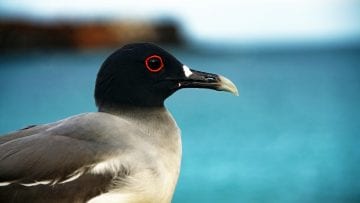
The high cliffs along the southern side of Plaza Sur provide excellent nesting and resting sites for seabirds. Swallow-tailed gulls are among the most characteristic species and can often be observed at close range.
Red-billed tropicbirds also use the cliffs and can regularly be seen flying past the rock faces. Frigatebirds and other seabirds may soar effortlessly on the air currents above the island.
Below, the ocean crashes against the rocks while birds glide almost effortlessly on the wind overhead. The contrast with the sheltered northern side of the island makes the walk surprisingly varied.
Remarkable hybrid iguanas
One of the most unusual aspects of Plaza Sur is the presence of hybrid iguanas.
Land iguanas and marine iguanas are separate species with very different ways of life, yet hybrids between the two have been recorded on Plaza Sur. These rare animals combine physical characteristics of both species and provide a fascinating example of what can happen when closely related species share the same small habitat.
Seeing a hybrid iguana is certainly not guaranteed. Precisely because they are uncommon, spotting one during your walk is a particularly special encounter.
Diving at Plaza Sur
Plaza Sur is best known as a landing and walking site, but diving is also possible in the surrounding waters. A dive here is separate from the regular visit to Plaza Sur during an expedition cruise.
Below the surface, volcanic rock formations and walls provide habitat for a variety of reef fish. Galapagos sea lions, green sea turtles, rays, moray eels and sharks are among the possible encounters. As with diving throughout the Galapagos, currents, season and conditions determine what you may see underwater.
For those visiting Plaza Sur on a regular expedition cruise, however, the island is first and foremost about the walk: land iguanas among the cacti, unusual vegetation and spectacular seabird cliffs along the southern coast.
Back to overview