Galapagos: common misconceptions and the facts
Remote, difficult to reach and only for those with a big budget? We look at five common misconceptions about the Galapagos – Marianne Salmans
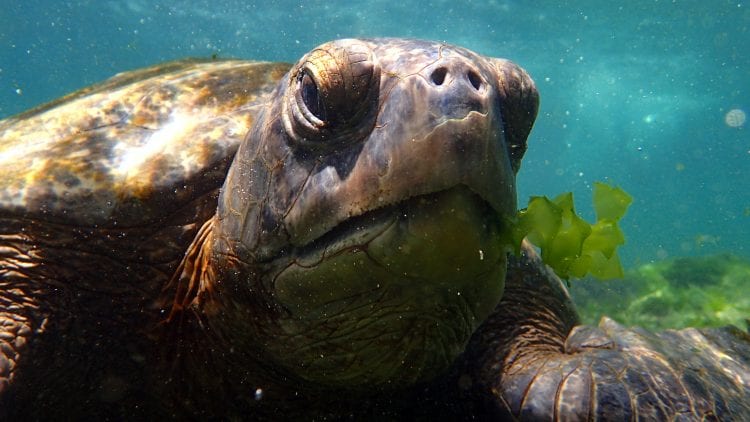
For many travellers, the Galapagos is a dream destination. A remote archipelago in the middle of the Pacific Ocean, home to wildlife found nowhere else on Earth and landscapes that can sometimes seem almost otherworldly.
Precisely because the islands are so extraordinary, there are also plenty of misconceptions about travelling to the Galapagos. Is the archipelago difficult to reach? Are visitor numbers strictly limited? Is a journey necessarily very expensive? And how much can you actually see if you only have a few days?
It is time to take a closer look at five common misconceptions about the Galapagos.
1. The Galapagos is remote and difficult to reach
Remote: yes. Difficult to reach: no.
The Galapagos lies approximately 1,000 kilometres off the coast of Ecuador. It is precisely this long isolation that has played such an important role in the development of the archipelago’s remarkable flora and fauna.
Yet the islands are relatively straightforward to reach today. International travellers first fly to mainland Ecuador. From Quito and Guayaquil, there are daily flights to the two main airports in the Galapagos: Baltra and San Cristóbal.
There are some special procedures before travelling to the islands. You need a Transit Control Card, and your luggage is inspected to help prevent invasive species from being introduced into the archipelago. On arrival, you also pay the entrance fee for the protected area.
The Galapagos certainly feels remote. Inaccessible it is not.
2. Only a limited number of tourists are allowed to visit the Galapagos
Not in the way people often think.
There is no simple annual limit whereby access to the Galapagos is closed once a certain number of visitors has been reached. Tourism in the archipelago is, however, strictly regulated to help protect its fragile natural environment.
This regulation is particularly evident when it comes to expedition cruises. In 2024, 66 vessels were licensed to operate expedition cruises, providing a combined capacity of 1,634 passengers. Many of these vessels are small, carrying just 16 guests, while the largest expedition vessels accommodate a maximum of 100 passengers.
The number of vessels, their permitted capacity and their itineraries are regulated through licences and operational quotas. This means that the number of visitors travelling through the protected area aboard expedition vessels cannot simply increase without limit. Ships also follow designated itineraries and visit protected sites accompanied by licensed naturalist guides.
There are clear restrictions on accommodation on the inhabited islands too. Hotels and other tourist accommodation may have a maximum of 35 rooms and 70 beds. This also limits the scale of accommodation in the Galapagos.
At the same time, the number of travellers staying on the islands has grown considerably in recent years. The Ecuadorian authorities therefore continually face the challenge of balancing tourism with quality of life on the islands and the protection of this fragile ecosystem.
This does not mean that you need to apply for permission months in advance to travel to the Galapagos. I do, however, recommend planning your journey well ahead. Smaller and popular expedition vessels in particular can fill up early for certain departure dates.
3. The Galapagos is an expensive destination
Admittedly, the Galapagos is not a budget destination.
There are blogs and travel providers that give the impression that you can visit the Galapagos for a relatively small amount of money. You can, but it is important to look carefully at what such a trip actually includes.
Lower-cost programmes are often short, with much of the first and last day taken up by travelling to and from the archipelago. You stay on one of the inhabited islands and visit sites that can be explored independently, perhaps supplemented by one or two day trips by boat. You can certainly see something of the Galapagos this way, but it is a very different experience from a journey that takes you to different islands, ecosystems and remote visitor sites.
There is another consideration. The Galapagos is not simply a holiday destination, but an exceptional and fragile protected natural area. The strong growth of tourism on the inhabited islands brings challenges relating to waste, infrastructure, water supply and the introduction of invasive species, amongst other things. This is why it is important to consider not only the price of your journey, but also how you choose to experience the archipelago.
For many travellers, I recommend an expedition cruise of at least eight days. You generally travel between the islands at night, allowing you to make the most of your days for walks, snorkelling and other activities. You can also reach remote visitor sites that are difficult or impossible to visit on a day trip from the inhabited islands.
Expedition cruises are largely inclusive: your accommodation on board, meals, guided excursions, snorkelling equipment and transfers between the airport and your vessel are included. The vessels operate within a strictly regulated system of licences, itineraries and visitor sites.
That does not mean that an island-based stay cannot be a good choice. The two ways of travelling simply offer very different experiences. Which one suits you best depends on your interests, the time you have available and your budget.
For many people, the Galapagos is a dream destination they will visit only once in their lifetime. My advice is therefore not to look only at how many days you get for your budget, but above all at what you will actually see and experience during those days. And to make considered choices when visiting this exceptional archipelago.
4. A few days is enough to see the Galapagos
You can see a lot in a few days, but experience only a small part of the archipelago.
On a map, the Galapagos Islands may appear to lie relatively close together. In reality, the archipelago extends over an enormous area, and many of its most interesting visitor sites are a considerable distance apart.
This makes both the duration and the itinerary of your journey important. On a short four- or five-day cruise, you will naturally visit fewer islands and locations than on an eight-day expedition cruise. And on any cruise, part of your arrival and departure days will be taken up by flights and transfers.
A longer cruise does not simply give you more time. Because the vessel can cover considerable distances at night, you can reach more remote islands without losing valuable holiday time to transfers. This gives you the opportunity to experience a greater variety of landscapes, ecosystems and wildlife.
If you have enough time, I find that around eight days on board provides a good basis for many travellers to really experience the Galapagos. Those hoping to see particular islands or wildlife species may benefit from choosing an even longer itinerary.
5. All the Galapagos Islands are more or less the same
Nothing could be further from the truth.
It is precisely the enormous differences between the islands that make the Galapagos so fascinating. Some islands are young, rugged and volcanic, with vast lava fields and little vegetation. Others are millions of years older and have much greener landscapes.
Wildlife also differs from island to island and even from one visitor site to another. Waved albatrosses, Galapagos penguins, marine iguanas, land iguanas, giant tortoises and the different species of Darwin’s finches all have their own distribution. Some species are found almost exclusively on just one or a handful of islands.
That is why, when choosing an expedition cruise, it is not only the vessel that matters. The itinerary is at least as important.
A beautiful vessel may suit your wishes perfectly, but if its itinerary does not include the islands and visitor sites where you can find the wildlife or landscapes you particularly want to see, it may not be the right cruise for you.
When putting together a Galapagos journey, I therefore always start by looking at what matters most to you. Would you particularly like to spend plenty of time snorkelling? Do you dream of seeing penguins, albatrosses or certain other wildlife? Would you like to experience the young volcanic islands in the west? Or are you looking for the most varied possible introduction to the archipelago?
Only then comes the question of which vessel and itinerary are the best match.
Because in the Galapagos, it is not simply about getting there, but above all about how you experience the islands.