Rábida
The red island of the Galapagos
Highlights
Red volcanic landscape, Galapagos sea lions, brown pelicans, flamingos, walking, snorkelling and diving
Wildlife
Galapagos sea lion, brown pelican, blue-footed booby, Nazca booby, American flamingo, white-cheeked pintail, Darwin’s finches, Galapagos dove, yellow warbler, Galapagos mockingbird, marine iguana, green sea turtle, spotted eagle ray, Galapagos fur seal, Galapagos penguin, sharks
Galapagos penguins are occasionally seen in the waters around Rábida, but this is not an encounter you should expect here.
See & experience
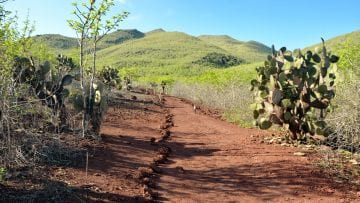
Rábida is instantly recognisable by its deep red landscape. The sand, rocks and cliffs have a warm reddish-brown colour, caused by the high iron content of the volcanic material and its oxidation. Combined with the blue sea and green Opuntia cacti, this gives Rábida an appearance unlike anywhere else in the Galapagos.
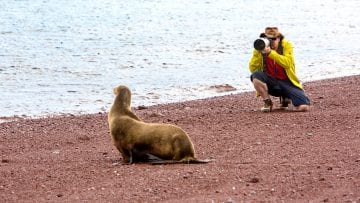
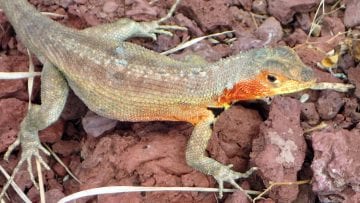
The island is relatively small and uninhabited and can only be visited on an expedition cruise. The regular land visitor site lies on the northern side, where a wet landing brings you onto the characteristic red beach. Galapagos sea lions regularly rest on the sand and along the shore, while marine iguanas can also be seen among the rocks.
A visit combines a walk through the dry volcanic landscape with birdwatching and, depending on the programme and conditions, swimming and snorkelling. Diving is also possible in the waters around Rábida.
The red beach
Your first encounter with Rábida immediately reveals its most distinctive feature. After a wet landing, you step onto a beach of striking reddish-brown sand.
Galapagos sea lions are regularly found here. Behind the beach, brown pelicans nest among the salt-tolerant vegetation. Rábida is a wonderful place to observe these large seabirds and their nesting behaviour.
Blue-footed boobies and Nazca boobies may also be seen along the coast and flying above the island.
The lagoon
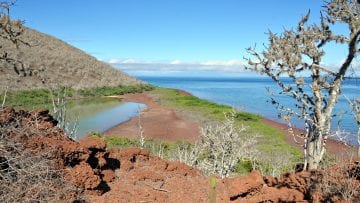
Immediately behind the beach lies a saltwater lagoon. Flamingos may use the lagoon for feeding and breeding, although their presence varies and an encounter is not guaranteed.
When they are present, the contrast between the pink birds, red landscape and surrounding vegetation creates a particularly beautiful scene. White-cheeked pintails, waders and other waterbirds also use the lagoon.
Rábida has undergone an impressive ecological recovery over recent decades. Following the removal of introduced species, the island’s original ecosystem has been able to recover. In 2022, flamingos were recorded breeding here again for the first time in more than twenty years.
Walking through the red landscape
From the lagoon, a trail continues through the dry landscape. You walk among Opuntia cacti, palo santo trees and low-growing vegetation, with recurring views of the strikingly coloured coastline.
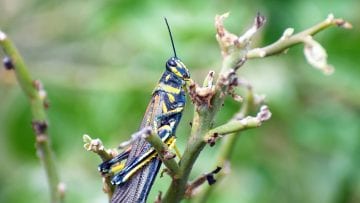
Here, the focus shifts from seabirds and waterbirds to smaller land birds. Several species of Darwin’s finches, Galapagos doves, yellow warblers and Galapagos mockingbirds may be seen along the trail.
As you gain height, views open up across the red beach and coastline. From above, Rábida’s extraordinary palette becomes particularly apparent: red volcanic rock and sand contrasting with the deep blue of the ocean.
Snorkelling at Rábida
A visit to Rábida is often combined with swimming and snorkelling. The rocky coastline and clear water reveal a completely different side of the island.
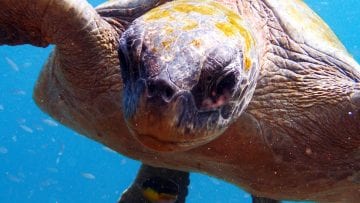
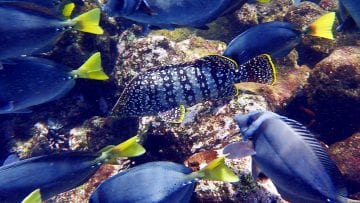
Galapagos sea lions, green sea turtles, rays and a variety of fish are among the possible encounters. With some luck, a Galapagos penguin may also appear in these waters. It is not, however, a species you should expect to see at Rábida in the same way as around parts of Isabela, Fernandina or Bartolomé.
Diving at Rábida
Rábida is also interesting below the surface. The island’s volcanic landscape continues underwater, with rock formations and sandy areas providing habitat for a wide variety of marine life.
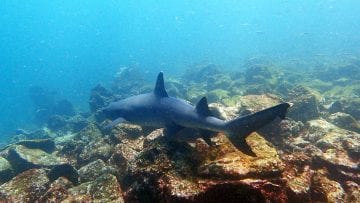
Galapagos sea lions, green sea turtles and spotted eagle rays are among the possible encounters. Garden eels can also be found on the sandy seabed, while several species of shark may occur in the surrounding waters. Galapagos penguins are occasionally seen as well.
Another interesting species found around Rábida is the Galapagos fur seal. The island therefore has more to offer beneath the surface and along its rocky shores than its small size might suggest.
An island in recovery
Rábida is fascinating not only for its distinctive landscape and wildlife, but also for its conservation story. Introduced goats were removed in the 1970s, followed later by an extensive programme to eradicate introduced rats.
The recovery of the island’s native ecosystem has since become increasingly visible. The return of breeding flamingos is a striking example.
Back to overview