Cultures of Ecuador
Indigenous communities, colourful markets, festivals and traditions from the Andes to the Amazon - Marianne Salmans
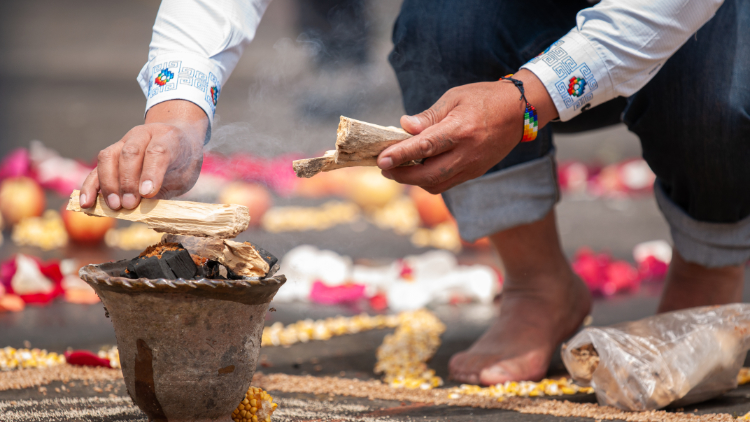
Discover the people behind one of South America’s most fascinating destinations
Travellers often visit Ecuador for its volcanoes, cloud forests, Amazon rainforest and the Galápagos Islands. Yet beyond its extraordinary landscapes lies another side of the country that is just as captivating: its people.
Within just a few hours, not only do the scenery and climate change dramatically, but so do the traditions, cuisine, music and ways of life. Wander through colourful indigenous markets in the Andes, listen to the rhythms of Afro-Ecuadorian marimba music on the Pacific coast or visit communities in the Amazon where centuries-old knowledge of the rainforest continues to be passed down through the generations.
These remarkable contrasts make Ecuador one of the most culturally diverse countries in South America. The country officially recognises 14 Indigenous nationalities and 18 Indigenous peoples, alongside Afro-Ecuadorian and Montubio communities, each with its own history, traditions and close connection to the landscape.
“To truly discover Ecuador, look beyond its landscapes and discover the people who call them home.”
A history shaped by many cultures
Ecuador’s cultural heritage reaches back thousands of years, long before Europeans first arrived in South America. Well before the rise of the Inca Empire, sophisticated civilisations flourished across what is now Ecuador, developing advanced agriculture, pottery, trade networks and religious traditions. Among the best known are the Valdivia, one of the oldest settled cultures in the Americas, the Machalilla culture along the Pacific coast and the Cañari civilisation of the southern Andes.
The Incas only expanded into present-day Ecuador during the fifteenth century. Their rule was relatively brief and not always peaceful. Several communities, most notably the Cañari, fiercely resisted Inca domination. Nevertheless, the empire introduced an extensive road network, new administrative systems and the Quechua language, from which today’s Ecuadorian Kichwa developed.
Spanish rule, beginning in the sixteenth century, transformed the country once again. Colonial cities were established, Catholicism became widespread and European customs gradually blended with Indigenous traditions. Following the Battle of Pichincha in 1822, Ecuador gained independence from Spain and became an independent republic in 1830.
These different historical layers remain visible throughout Ecuador today. A Catholic procession may still incorporate elements of an ancient Indigenous harvest celebration, while traditional clothing often reflects both ancestral symbolism and colonial influence. Rather than replacing one another, Indigenous, European and African traditions have gradually merged to create the rich cultural identity that defines Ecuador today.
Culture in Ecuador is therefore not the story of a single people or civilisation, but of centuries of encounter, adaptation and exchange.
Why culture is an essential part of travelling through Ecuador
Every region tells a different story.
The colourful textile markets of Otavalo, the spiritual traditions of the Andes, the rainforest communities of the Amazon and the marimba rhythms of Esmeraldas each offer a unique perspective on Ecuador. Together, they reveal a country whose greatest richness lies not only in its biodiversity, but also in its cultural diversity.
Travelling through Ecuador is therefore about far more than visiting beautiful places. It is about meeting the people, understanding their traditions and discovering how history, nature and culture continue to shape everyday life.
The peoples and cultures of Ecuador
Ecuador’s remarkable cultural diversity is no coincidence. Over thousands of years, Indigenous peoples, European settlers, Africans and later migrant communities have all contributed to the country’s identity. Today, these influences live side by side, creating one of South America’s richest cultural landscapes.
Although Ecuador has a population similar to that of the Netherlands, its cultural diversity is extraordinary. Languages, traditions, music, clothing and even ways of life can vary dramatically from one region to the next. Travelling from the Andes to the Pacific coast or into the Amazon is not simply a change of scenery, but an opportunity to experience entirely different cultures.
Indigenous cultures of the Andes
The Ecuadorian Andes are home to large Kichwa communities and several Indigenous peoples with distinct identities, including the Otavaleños, Kayambi, Karanki, Puruhá, Salasaka and Cañari. While many visitors refer to them collectively as “the Indigenous people of the Andes”, each community has its own history, traditions, clothing and cultural heritage.
Among the best known are the Otavaleños, internationally recognised for their colourful textiles and vibrant market in Otavalo. Long before tourism arrived, Otavaleño traders travelled throughout South America and beyond, selling woven fabrics and handcrafted goods. Today, their craftsmanship continues to be admired around the world.
Traditional clothing remains an important expression of identity in many Andean communities. Embroidered blouses, handwoven shawls, felt hats, ponchos and carefully crafted jewellery are not simply decorative; they often reflect family heritage, local traditions and regional identity.
Another important concept is the minga, a tradition of voluntary community work. Whether maintaining irrigation channels, repairing village paths or helping neighbours harvest crops, the minga reflects values of cooperation, reciprocity and shared responsibility that remain central to community life today.
The peoples of the Amazon
For many travellers, Ecuador’s Amazon is synonymous with extraordinary wildlife. Yet it is also home to some of the country’s most fascinating cultures.
Communities including the Waorani, Shuar, Achuar, Kichwa and Sápara have lived in the rainforest for generations, developing an intimate understanding of its rivers, plants, animals and seasonal rhythms. Their knowledge is not found in books, but passed from one generation to the next through daily life, storytelling and oral tradition.
For these communities, the rainforest is far more than a place to live. It provides food, medicine and building materials, while also forming an essential part of their spiritual beliefs and cultural identity.
The Waorani, perhaps Ecuador’s best-known Amazonian people, have inhabited the rainforest for centuries and maintain a particularly close relationship with their environment. The Shuar and Achuar, whose territories extend into neighbouring Peru, preserve their own languages, customs and ceremonies. The Sápara, meanwhile, are internationally recognised for their rich oral traditions and ancestral knowledge of the rainforest, which UNESCO has listed as Intangible Cultural Heritage.
Visiting an Indigenous community is most meaningful when tourism is community-led. Rather than observing people as part of an attraction, travellers are welcomed as guests, learning directly from those who choose to share their traditions, stories and daily lives. At Aves Travels, we therefore favour experiences where local communities play an active role and tourism genuinely benefits the people who call these places home.
Afro-Ecuadorian culture
The history of Afro-Ecuadorian communities dates back to the colonial period. Today, many live along Ecuador’s northern Pacific coast, particularly in the province of Esmeraldas, as well as in the Chota Valley between the provinces of Imbabura and Carchi.
Over the centuries these communities have developed a vibrant cultural identity, expressed through music, dance, gastronomy and storytelling.
Perhaps the best-known symbol of Afro-Ecuadorian culture is the marimba. The rhythms of this traditional wooden percussion instrument accompany songs and dances performed during festivals and community celebrations. Together with the associated music, dance and oral traditions of Esmeraldas, marimba culture has been recognised by UNESCO as Intangible Cultural Heritage.
The cuisine of Esmeraldas is equally distinctive. Fresh fish, shellfish, coconut milk, plantains and aromatic herbs feature prominently in local dishes. One of the region’s culinary highlights is encocado, in which fish or prawns are gently cooked in a rich coconut sauce, perfectly reflecting the region’s tropical climate and coastal heritage.
The Montubio culture of the coast
Away from Ecuador’s beaches and fishing villages lies another fascinating cultural tradition: the Montubios.
Living mainly in the provinces of Manabí, Guayas, Los Ríos and Santa Elena, the Montubios have long been associated with agriculture, cattle ranching and horse riding. Their identity is closely tied to Ecuador’s rural landscapes, where traditions have been preserved across generations.
Horse riding, rodeos, oral storytelling, music and a distinctive style of dress continue to play an important role in Montubio life. Wide-brimmed hats, practical clothing and expert horsemanship remain familiar sights in many rural communities.
For travellers, the Montubio culture reveals a side of coastal Ecuador that extends far beyond palm-fringed beaches. It offers a glimpse into the country’s agricultural heartland and a way of life that remains deeply connected to the land.
A journey through Ecuador is also a journey through its people
What makes Ecuador truly special is not only the diversity of its landscapes, but also the diversity of the people who inhabit them.
From the colourful textile traditions of the Andes to the rainforest knowledge of the Amazon, from the marimba rhythms of Esmeraldas to the horsemen of the Pacific coast, every region tells its own story. Together, these cultures create a country whose greatest richness lies not only in nature, but in the people who have shaped it for centuries.
Traditional craftsmanship that keeps history alive
Craftsmanship in Ecuador is far more than a souvenir industry. Across the country, traditional skills continue to be passed down from one generation to the next, preserving centuries of knowledge, regional identity and cultural pride.
Whether you visit a family-run weaving workshop in the Andes, a leather artisan in Cotacachi or a Panama hat maker on the Pacific coast, you’ll quickly discover that craftsmanship remains an important part of daily life.
For many families, these traditions are not simply a link to the past, but an essential source of income and a way of preserving their cultural heritage.
The true story of the Panama Hat
One of Ecuador’s greatest cultural achievements is also one of its best-kept secrets.
The famous Panama Hat does not come from Panama at all. It is entirely Ecuadorian.
For centuries, these elegant hats have been handwoven from the fibres of the toquilla palm, which grows along Ecuador’s Pacific coast. During the nineteenth century, they were exported through Panama, where they became popular with travellers crossing the isthmus and workers building the Panama Canal. The name remained, even though the hats have always been made in Ecuador.
Producing a high-quality Panama Hat is a remarkable process. The fibres are harvested, boiled, dried and carefully woven entirely by hand. Depending on the fineness of the weave, a single hat may take anything from a day to several months to complete.
The finest examples, produced in villages such as Pile in the province of Manabí, are considered true works of art. In 2012, UNESCO recognised the traditional weaving of Ecuadorian toquilla straw hats as Intangible Cultural Heritage of Humanity.
Today, buying a genuine Panama Hat in Ecuador means taking home not only an elegant keepsake, but also a piece of the country’s living cultural heritage.
Textiles, leather, woodcarving and tagua
Textiles remain one of Ecuador’s most recognisable crafts.
In the Andean highlands, generations of weavers continue to produce ponchos, blankets, scarves and tapestries using techniques that have evolved over centuries. While some workshops preserve traditional patterns, others combine ancestral methods with contemporary design, creating beautiful pieces that reflect both past and present.
The town of Cotacachi has become renowned throughout Ecuador for its exceptional leather craftsmanship. Shoes, jackets, handbags and belts are produced by skilled artisans whose workshops line the town’s streets.
Further south, San Antonio de Ibarra has earned a reputation as Ecuador’s capital of woodcarving. Here, sculptors transform cedar and other native woods into religious art, contemporary sculptures and finely detailed decorative pieces.
Another uniquely Ecuadorian material is tagua, often referred to as vegetable ivory. Harvested from the seeds of a tropical palm, tagua is remarkably hard, smooth and naturally ivory-coloured. It is widely used to create jewellery, buttons and decorative objects, providing a sustainable alternative to animal ivory.
Whenever possible, buying directly from local workshops or artisan cooperatives supports traditional craftsmanship and helps preserve these remarkable skills for future generations.
The flavours of Ecuador
Just as Ecuador’s landscapes change from region to region, so does its cuisine.
Each part of the country has developed its own culinary traditions, shaped by climate, geography and locally available ingredients. Travelling through Ecuador therefore becomes a journey of flavours as much as landscapes.
The Pacific coast
Fresh seafood, coconut, rice and plantains dominate the cuisine along Ecuador’s coast.
One of the region’s signature dishes is encocado, in which fish or prawns are gently cooked in a fragrant coconut sauce with herbs and spices. Coastal Ecuador is also famous for its own style of ceviche, which differs noticeably from the better-known Peruvian version. Ecuadorian ceviche is generally served with a more generous citrus-based broth and is often accompanied by popcorn, toasted corn or plantain crisps.
The tropical climate also produces an abundance of fresh fruit, including mangoes, pineapples, passion fruit and countless varieties that are rarely found outside South America.
The Andes
In the highlands, the cuisine becomes heartier and reflects centuries of agricultural tradition.
Potatoes, maize, quinoa, broad beans and locally raised pork feature prominently in many dishes.
A favourite throughout the Andes is locro de papa, a creamy potato soup prepared with cheese and avocado. Another classic is hornado, slow-roasted pork served with potatoes, maize and fresh vegetables.
Around Cuenca, dishes prepared with mote – large boiled maize kernels – remain an essential part of local cuisine and reflect traditions that stretch back long before the arrival of the Spanish.
The Amazon
The Amazon offers a completely different culinary experience.
Fresh river fish, cassava (known locally as yuca), tropical fruits and locally grown herbs form the basis of many traditional dishes.
One of the best-known specialities is maito, where fish is wrapped in large leaves and gently cooked over an open fire. The result is simple, aromatic and deeply connected to the rainforest itself.
The Amazon is also home to some of the world’s finest cacao. Ecuador has long been recognised for producing exceptional cocoa beans, and in recent years a new generation of artisan chocolatiers has brought Ecuadorian chocolate to international acclaim.
More than a meal
Food in Ecuador is about far more than eating.
A bustling market in Otavalo, lunch with a local family in the Andes or sharing freshly prepared Amazonian dishes in a rainforest lodge offers genuine insight into daily life and regional traditions.
These moments often become some of the most memorable experiences of a journey, revealing the warmth, hospitality and generosity for which Ecuadorians are known.
The best way to understand Ecuador is not only through its landscapes, but around its table.
Festivals: where Ecuador’s traditions come to life
Throughout the year, Ecuador celebrates an extraordinary variety of festivals, many of which combine Indigenous traditions with Spanish colonial and Catholic influences. Rather than replacing one another, these different customs have gradually merged over centuries, creating celebrations that are unique to Ecuador.
For travellers, festivals offer one of the most authentic ways to experience local culture. Music fills village squares, traditional costumes reappear, communities gather to celebrate their heritage and visitors are often welcomed to witness the festivities.
Inti Raymi
One of Ecuador’s most important Indigenous celebrations is Inti Raymi, the Festival of the Sun.
Held around the June solstice, it celebrates the harvest and gives thanks to Inti, the Inca sun god. Across the Andean highlands, communities gather for ceremonies, traditional music, dancing and communal meals, honouring the close relationship between people, nature and the changing seasons.
One of the festival’s most recognisable figures is the Aya Uma—also known as the Diablo Huma—whose distinctive double-faced mask symbolises balance, duality and the cycle of life.
Although Inti Raymi has ancient origins, it remains a living tradition, celebrated with great pride throughout the Ecuadorian Andes.
Mama Negra
Few celebrations capture Ecuador’s cultural diversity quite like Mama Negra, held in the Andean city of Latacunga.
This colourful festival blends Indigenous, Spanish and Afro-Ecuadorian traditions into an unforgettable celebration of music, dance and elaborate costumes. The streets fill with decorated horses, marching bands and symbolic characters, creating one of the country’s most spectacular cultural events.
Although rooted in Catholic tradition, Mama Negra beautifully illustrates how Ecuador’s different cultures have influenced one another over the centuries.
Carnival
Carnival takes on a different character in every region of Ecuador.
In Ambato, the famous Festival of Fruits and Flowers replaces the water fights common elsewhere in the country. The city celebrates its agricultural abundance with colourful parades, floral displays, music and local gastronomy.
Elsewhere, Carnival is a joyful celebration of community, often involving water, music, dancing and shared meals that bring entire villages together.
Living traditions
Beyond these well-known festivals, countless local celebrations take place throughout the year.
The Yamor Festival in Otavalo celebrates the maize harvest, while the Diablada de Píllaro is famous for its striking devil masks and energetic street processions.
Whether large or small, these celebrations reveal something fundamental about Ecuador: traditions here are not preserved in museums—they continue to be lived.
Experiencing Ecuador with respect
Travelling through Ecuador offers opportunities for genuine cultural encounters, but these experiences are most meaningful when approached with curiosity and respect.
A conversation with a market vendor, a visit to a family-run weaving workshop or sharing a meal with a local community often creates memories that last far longer than simply ticking off famous sights.
Simple gestures, asking permission before photographing people, showing interest in local customs and buying directly from artisans whenever possible, help support communities while creating more authentic experiences for everyone involved.
At Aves Travels, we believe that cultural experiences should never feel staged. Instead, they should arise naturally as part of a thoughtfully designed journey, allowing you to experience Ecuador through the people who know it best.
Discover Ecuador beyond its landscapes
Ecuador is often celebrated for its extraordinary biodiversity, spectacular volcanoes and the unique wildlife of the Galápagos Islands. Yet one of the country’s greatest treasures is its cultural diversity.
From the Indigenous communities of the Andes and the ancient knowledge of the Amazon to the Afro-Ecuadorian traditions of Esmeraldas and the rural heritage of the Pacific coast, every region tells its own story.
These encounters transform a holiday into something much deeper: an understanding of the people, traditions and history that continue to shape Ecuador today.
At Aves Travels, we believe the most memorable journeys are those that combine breathtaking landscapes with meaningful cultural experiences. By taking the time to meet local people, discover regional traditions and experience everyday life, you’ll return home with a far richer understanding of this remarkable country.


