The regions of Peru
From desert coast and high Andes to the Amazon: three distinct worlds, each with its own character - Marianne Salmans
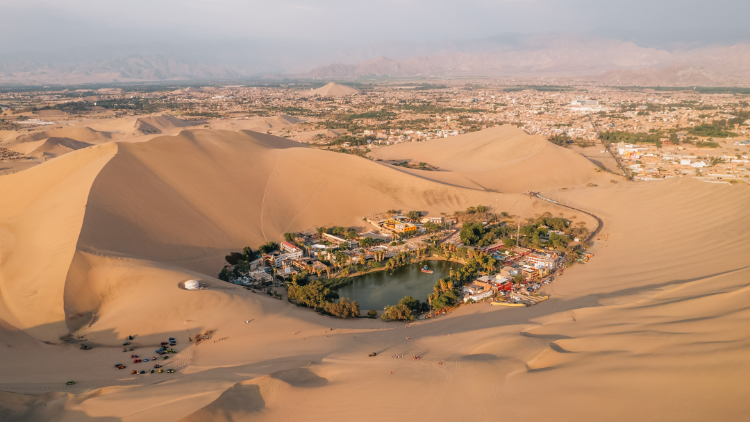
From desert landscapes to the Amazon rainforest
Peru is one of the world’s most diverse destinations. Within a single journey, the landscape transforms from vast desert coastlines and snow-capped mountain peaks to ancient Inca cities and the world’s largest tropical rainforest. It is this remarkable diversity that makes Peru so extraordinary.
In this article, we take you through Peru’s three geographical regions: the coast, the Andes and the Amazon rainforest. Each has its own landscapes, climate, culture and character. Together, they create a destination that never ceases to surprise.
The Coast
Where desert meets the Pacific Ocean
When people think of Peru, Machu Picchu is often the first place that comes to mind. Yet much of the country begins very differently, with an immense desert stretching along the Pacific Ocean.
Peru’s coastline extends for more than 3,000 kilometres and is largely made up of arid desert landscapes, interrupted only by fertile river valleys descending from the Andes. The result is a fascinating contrast of endless sand dunes, green oases, vineyards and fertile agricultural land.
The coastline is equally rich in wildlife. Thanks to the cold Humboldt Current, the nutrient-rich waters attract sea lions, Humboldt penguins, pelicans, cormorants and thousands of seabirds. A boat excursion to the Ballestas Islands, often referred to as the ‘Little Galápagos of Peru’, offers the opportunity to observe this remarkable wildlife at close range.
Further south lie the mysterious Nazca Lines, while in the north surfers travel to Puerto Chicama, home to one of the world’s longest left-hand waves. Close to Lima lies Caral, recognised as the oldest known civilisation in the Americas and one of the earliest urban settlements in the world.
Peru’s coast proves that even the driest landscapes can be full of life.

The Andes
The heart of Peru
From the coast, the landscape gradually rises into the Andes, the longest mountain range on Earth. Towering peaks, deep valleys and centuries-old agricultural terraces have shaped both the landscape and the lives of its people for thousands of years.
In northern Peru lies the Cordillera Blanca, the highest tropical mountain range in the world. It is home to Nevado Huascarán (6,768 metres), Peru’s highest mountain. Glacial lakes, dramatic peaks and spectacular hiking trails make this one of the country’s finest destinations for nature lovers.
Further south, the landscape changes once again. Around Cusco and the Sacred Valley, nature and history come together in remarkable harmony. Here, the Incas built temples, fortresses and agricultural terraces that continue to impress visitors today. While Machu Picchu is undoubtedly the region’s most famous site, places such as Ollantaytambo, Pisac and Moray offer equally fascinating insights into this extraordinary civilisation.
Further south still lie two of Peru’s natural icons. Lake Titicaca, the highest navigable lake in the world, has been home to indigenous communities for centuries. Nearby, the Colca Canyon, one of the deepest canyons on Earth, is one of the finest places to witness the majestic Andean condor soaring on the mountain thermals.
The Andes are not only the geographical heart of Peru, but its cultural heart as well.

The Amazon Rainforest
Where nature takes centre stage
East of the Andes, the landscape changes once more. Misty cloud forests gradually give way to the vast Amazon rainforest, which covers almost sixty per cent of Peru.
This is one of the most biodiverse places on Earth. Monkeys move through the forest canopy, caimans glide silently through the rivers and giant river otters hunt in secluded lakes. At natural clay licks, colourful macaws gather in spectacular numbers, while thousands of bird species, butterflies and insects bring the rainforest to life.
Depending on your itinerary, you may stay in a comfortable rainforest lodge or explore the region aboard a luxury Amazon expedition cruise. Both offer unforgettable opportunities to discover this extraordinary ecosystem with experienced naturalist guides.
Beyond its wildlife, the Amazon is also home to numerous indigenous communities who continue to live in close harmony with the rainforest, preserving centuries of knowledge about its plants, wildlife and traditions.
The Peruvian Amazon reveals a completely different side of the country, one that many travellers never expect.
Three worlds, one destination
It is the extraordinary contrast between the coast, the Andes and the Amazon that makes Peru such an exceptional destination. Few countries offer such dramatic changes in landscapes, climates, wildlife and culture within a single journey.
Not every itinerary needs to include all three regions. By making thoughtful choices, your journey gains more balance, greater depth and more opportunities for meaningful encounters. Whether you are drawn to dramatic mountain scenery, the legacy of the Incas or the incredible biodiversity of the Amazon, each region reveals a different side of Peru.
Whichever route you choose, it is this diversity that makes Peru a destination that continues to inspire.

