An exceptional diving holiday featuring spectacular underwater landscapes, with plenty of opportunities to discover the islands’ wildlife and natural beauty above the water.
The Galapagos Islands are among the world’s most extraordinary diving destinations. Many experienced divers dream of joining a liveaboard expedition to the remote islands of Darwin and Wolf, where large schools of hammerhead sharks, Galapagos sharks and other impressive marine creatures can be found. Yet the waters surrounding the central islands also offer spectacular underwater experiences.
During this 10-day diving holiday, you will explore a variety of dive sites around San Cristóbal, Española, Floreana, Santa Cruz and Seymour Norte. At Kicker Rock, you dive alongside imposing rock walls, Gordon Rocks is renowned for its hammerhead sharks, and around Floreana you will discover colourful underwater landscapes with a remarkable diversity of fish, rays and other marine life.
What makes this journey particularly special is the combination of diving and excursions on land. Walk among seabirds on Española, encounter giant tortoises in the highlands of Santa Cruz and learn about the extraordinary wildlife and history of the archipelago.
You will stay in hotels on San Cristóbal and Santa Cruz, taking day trips by boat from each island. This allows you to combine unforgettable diving experiences with the relaxed pace of island hopping, without spending your entire holiday aboard a vessel.
This journey is designed for certified divers. Additional experience requirements apply to Gordon Rocks.
The convergence of several ocean currents creates an exceptionally rich underwater ecosystem in the Galapagos. At Kicker Rock, you dive alongside impressive rock walls, while Gordon Rocks is particularly well known for the schools of hammerhead sharks frequently encountered here.
Floreana, Mosquera and Seymour Norte also offer excellent diving opportunities. From colourful underwater walls and schools of fish to curious sea lions, eagle rays and whitetip reef sharks, every dive site has its own character.
On Española, you walk among blue-footed boobies, Nazca boobies and colourful marine iguanas. During the breeding season, you may also encounter the remarkable waved albatross.
On San Cristóbal, you can observe sea lions at La Lobería, while the lush highlands of Santa Cruz are home to giant tortoises roaming freely in their natural habitat. A visit to the Charles Darwin Research Station also provides insight into the conservation efforts taking place across the islands.
For many experienced divers, a diving expedition to the remote islands of Darwin and Wolf is a dream. However, you can also discover the spectacular underwater world of the Galapagos without joining a multi-day liveaboard.
During this island-hopping journey, you take diving excursions from San Cristóbal and Santa Cruz while staying in comfortable hotels. This gives you the freedom to combine diving with wildlife excursions and time to enjoy island life.
Upon arrival at Guayaquil International Airport, you will be welcomed by your driver and transferred to your hotel.
Guayaquil is Ecuador’s largest city and provides a convenient starting point for your journey to the Galapagos. Depending on your arrival time, you may have the opportunity to relax or explore the area around your hotel.
Tomorrow, you will fly to San Cristóbal, where your diving adventure begins.
After breakfast, you will be transferred to the airport for your flight to San Cristóbal, one of the inhabited islands of the Galapagos.
Upon arrival, your local guide will welcome you and accompany you to your hotel in Puerto Baquerizo Moreno. After lunch, you will begin your introduction to the extraordinary natural environment of the archipelago.
You will visit the Interpretation Centre, where you will learn about the volcanic origins, natural history and human settlement of the Galapagos. The exhibits also provide insight into the challenges of conservation and protecting this fragile ecosystem.
You then walk to Cerro Tijeretas, a hill offering beautiful views across the coastline and surrounding bays. Frigatebirds are commonly seen in this area, soaring above the rocky shore.
Depending on conditions, there may be an opportunity to snorkel in the sheltered bay.
Afterwards, you return to your hotel.
Today, you will visit Española, one of the oldest and most remarkable islands in the Galapagos. The island is renowned for its large seabird colonies and distinctive wildlife, including species found nowhere else in the world.
In the morning, you take a guided walk at Punta Suárez. Along the rocky coastline, you will encounter large numbers of blue-footed boobies, Nazca boobies and marine iguanas. Galapagos hawks and inquisitive mockingbirds are also regularly seen here.
One of the highlights is the colony of waved albatrosses, which breed here for much of the year. Their elaborate courtship displays are particularly fascinating to observe.
The walking trail follows dramatic cliffs where seabirds glide above the ocean. You will also visit the famous blowhole, where seawater is forced high into the air when the waves are strong enough.
After lunch, your first diving excursion takes place in the waters around Gardner and Osborn.
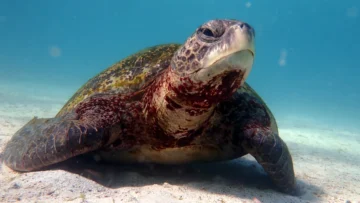
The relatively shallow waters offer excellent opportunities to encounter different species of rays, sea turtles, sea lions and reef fish. Whitetip reef sharks, Galapagos sharks and occasionally even hammerhead sharks may also be seen.
In the late afternoon, you return by boat to San Cristóbal.
Today, you will explore one of the best-known dive sites in the Galapagos: Kicker Rock, locally known as León Dormido.
This impressive volcanic rock formation rises approximately 150 metres above the ocean. Its two steep rock walls are separated by a natural channel, where marine life is particularly abundant.
The programme includes two dives. You will explore the underwater walls and the channel between the rock formations, where schools of fish, sea turtles and several shark species can be found.
The possibility of encountering hammerhead sharks makes Kicker Rock especially appealing. Galapagos sharks, rays and other large marine animals may also be seen.
Diving conditions vary, and currents can be present. Good buoyancy control is therefore important.
Between dives, you can enjoy the surrounding scenery and lunch on board. In the afternoon, you return to Puerto Baquerizo Moreno.
The morning begins with a visit to La Lobería, a beautiful coastal area on San Cristóbal named after the large numbers of sea lions living here.
You can observe these animals resting on the beach and rocks, while others play in the water. The area also offers excellent opportunities for snorkelling and watching sea lions in their natural habitat.
You then walk towards Las Negritas, a rocky coastal area where blue-footed boobies, frigatebirds and swallow-tailed gulls can be found. The trail crosses sections of volcanic rock and offers beautiful views across the ocean.
After lunch, you travel to the harbour for the crossing by public speedboat to Santa Cruz. The journey takes approximately two hours, depending on sea conditions.
Upon arrival in Puerto Ayora, you will be transferred to your hotel, where you will spend the next five nights.
Today, you will enjoy a diving excursion in the waters around Floreana. The island lies in an area strongly influenced by the nutrient-rich Humboldt Current, creating a particularly diverse underwater environment.
One of the possible dive sites is Punta Cormorant, where sandy seabeds alternate with rocky formations. Moray eels and octopuses hide among the rocks, while rays and various reef fish inhabit the seabed.
A particularly unusual sighting is the red-lipped batfish, a remarkable fish that uses its modified fins to move along the ocean floor.
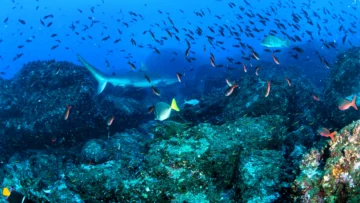
The waters around Champion also offer excellent diving opportunities. Underwater walls are covered with black coral, gorgonians and sponges, while large schools of fish can form impressive patterns.
During the dives, you may also encounter Galapagos sharks, sea turtles and curious sea lions.
After a day of memorable underwater encounters, you return to Puerto Ayora.
Gordon Rocks is one of the most famous dive sites in the central Galapagos. The rock formation is the remains of a partially submerged volcanic crater and lies approximately one hour by boat from Santa Cruz.
Beneath the surface, you will discover steep rock walls and deeper sections where large marine animals frequently gather.
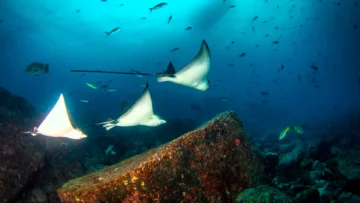
The main attraction is the hammerhead sharks, which are sometimes seen in impressive schools. Eagle rays, golden rays, sea turtles, moray eels and various reef fish also inhabit these waters.
Due to its exposed location, currents and swell can be strong. Gordon Rocks is therefore particularly suitable for divers with sufficient experience and good buoyancy control.
According to the programme, this dive site requires a minimum of 25 logged dives, together with additional conditions regarding recent diving experience or an assessment by the dive guide.
In the afternoon, you return to Puerto Ayora.
Today, you will explore two other remarkable diving areas north of Santa Cruz.
After breakfast, you travel to the Itabaca Channel, where you board the dive boat. From here, you sail towards Mosquera, a small sandy island between Baltra and Seymour Norte.
Beneath the surface lies a varied underwater landscape of sandy seabeds and rocky sections. Large numbers of garden eels, reef fish and different species of rays inhabit these waters. Whitetip reef sharks, blacktip sharks and hammerhead sharks are also regularly seen in the area.
Your second dive takes place around Seymour Norte.
Here, you follow a sloping seabed with sandy stretches and rocky reefs. Eagle rays frequently pass by in schools, while whitetip reef sharks rest on the seabed. Other shark species may also appear in the open water.
Currents can vary, so the exact dive route will be adapted to the conditions.
Afterwards, you return to your hotel on Santa Cruz.
After several days beneath the surface, today’s focus is on the wildlife and landscapes of the islands.
You will visit the lush highlands of Santa Cruz, where the scenery contrasts sharply with the dry coastal areas. Here, abundant vegetation provides a natural habitat for the famous Galapagos giant tortoises.
At El Chato, you walk along trails through the tortoises’ natural habitat. You may see these impressive animals grazing, resting or slowly moving through the vegetation.
You will also explore the remarkable lava tunnels, formed when the outer surface of flowing lava cooled while molten rock continued to move beneath it.
After lunch, you visit the Charles Darwin Research Station in Puerto Ayora. Here, you will learn about scientific research and conservation programmes dedicated to protecting the unique wildlife of the Galapagos.
Particular attention is given to the protection and breeding of the different species of giant tortoises.
Afterwards, you return to your hotel for your final evening on the islands.
After breakfast, depending on your flight time, you may have some time to stroll through Puerto Ayora or browse for souvenirs.
You then travel through the highlands of Santa Cruz to the Itabaca Channel and onwards to Baltra Airport.
Here, you say farewell to the Galapagos and fly back to mainland Ecuador.
Your 10-day diving holiday comes to an end, leaving you with unforgettable memories of extraordinary encounters above and below the water.
"*" indicates required fields